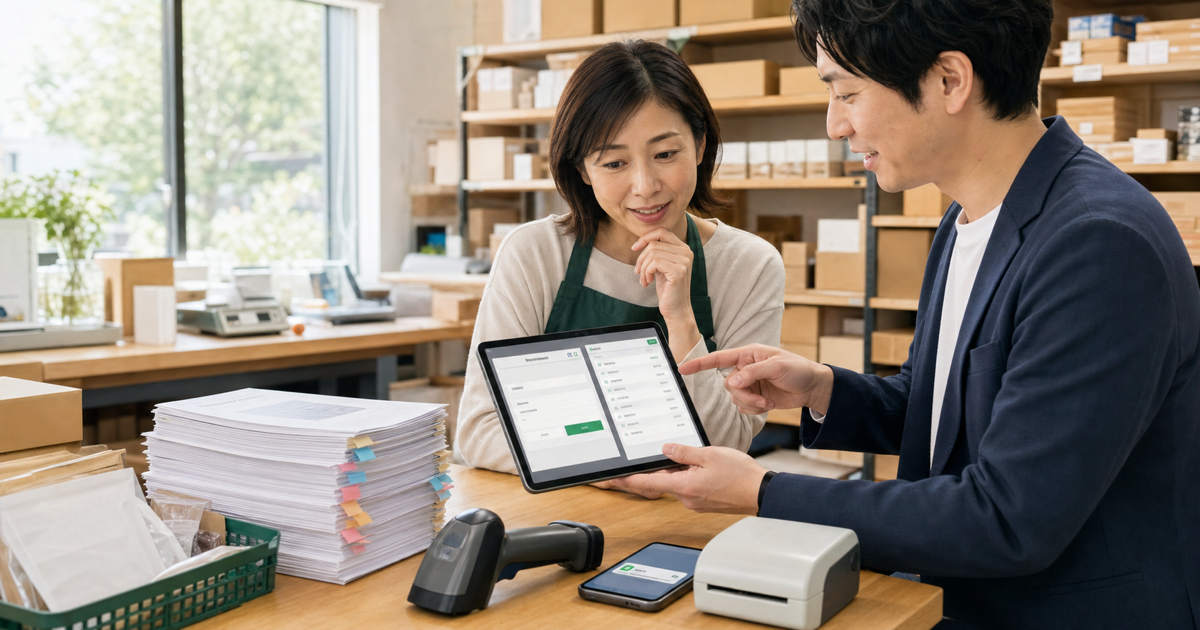
A production estimate is difficult to trust when the workflow, screens, data, or integrations are still uncertain. In those cases, a focused prototype can answer the highest-risk questions before both sides price the complete system.
Uncertainty before an estimate is normal
Teams often know the problem but not the best interaction. Staff may disagree about the approval flow, customers have not seen the proposed screens, or an external service may not provide the expected data. Turning every guess into a production requirement creates a large risk allowance.
The short answer
Prototype first when a small, testable representation can change the scope decision. Do not prototype merely to produce attractive screens. State the question, participant, scenario, and evidence you need.
What a prototype can clarify before estimating
A prototype can reveal whether users understand the flow, whether staff responsibilities are realistic, which fields are necessary, what the administrator must see, and where a manual step is acceptable. It can also expose integration assumptions without building a production connection.
The output should be decisions: keep, change, postpone, or investigate.
Five situations where a prototype is valuable
- The user journey is new and has not been observed.
- Several teams disagree about the normal workflow.
- Admin work and exceptions are more complex than the customer screen.
- An external integration has uncertain data or behavior.
- The team needs evidence before committing to a larger budget.
For a familiar, standard flow with clear requirements, configuration or a normal implementation estimate may be more efficient.
A prototype is not a miniature production system
Production software needs reliability, security, monitoring, backups, support, and complete error handling. A prototype may use sample data, simulated notifications, or a manual operator behind the scenes. Be explicit that it is for evaluation and must not receive real personal data unless it has been built to handle it safely.
What to include in the first prototype
1. One path from entry to outcome
Choose a representative user and one complete scenario.
2. Sample data
Use realistic but fictional records so participants can judge the screens without privacy risk.
3. Simulated integrations
Show the expected input and output before investing in authentication, retries, and monitoring.
4. A minimal admin view
Include enough for an operator to make the decision required by the flow.
5. A feedback plan
Prepare tasks and questions before the test. General reactions such as “looks good” are weak evidence.
Why the estimate becomes clearer afterward
The team can replace guesses with observed behavior, confirm required states, separate manual from automated work, and document integration gaps. The estimate can then distinguish production requirements from future ideas.
The prototype does not guarantee a fixed final cost. It reduces specific uncertainty and makes remaining assumptions visible.
When not to rush into a prototype
Do not prototype when a standard SaaS already demonstrates the workflow, when the requirement is a mandatory technical upgrade with no meaningful interaction question, or when the team has not identified any decision the prototype would change.
Pre-consultation checklist
- [ ] The uncertain decision is written in one sentence.
- [ ] Target users and test scenario are known.
- [ ] The prototype has a clear non-production boundary.
- [ ] Sample data can be used safely.
- [ ] Integrations that may be simulated are identified.
- [ ] Evidence and next-decision criteria are agreed.
- [ ] Ownership of findings and the production estimate is clear.
A consultation note you can copy
Decision we need to make: User and scenario: Current uncertainty: One flow to prototype: Data or integration to simulate: People who will test it: Evidence that would support production development: Features explicitly outside the prototype:
Your next step
Choose the assumption that could most change scope. Ask whether a one-flow prototype, a SaaS trial, or a technical investigation is the cheapest reliable way to test it.
Further reading
Use established usability testing guidance for task-based evaluation, and consult official API, security, privacy, and accessibility documentation before converting the validated flow into a production plan.